
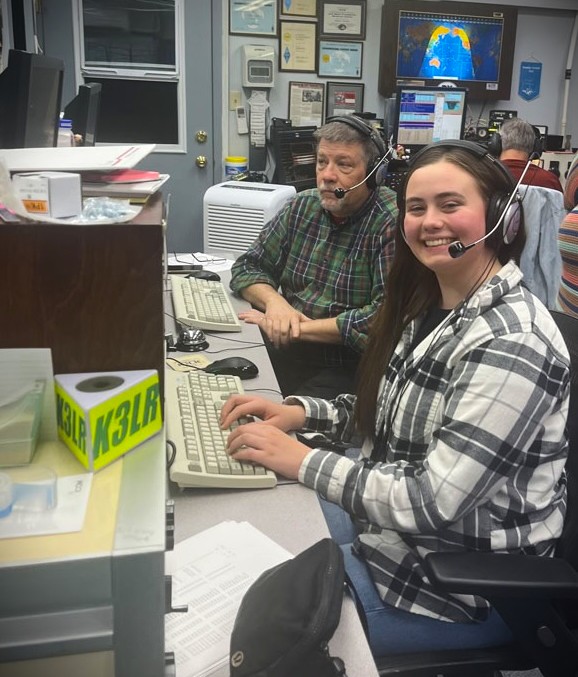
With the 2026 CQ World Wide DX Contest SSB completed and the CQ WW DX Contest CW coming up soon (Nov. 28-29), I thought it might be helpful to discuss ways of preparing for a multi-op contest effort if you’ve never been part of one.
I first participated in a multi-op contest in February 2024 for the CQ World Wide 160-Meter Contest, but my first time in a larger multi-op team was in March 2024 for the ARRL DX SSB. Looking back, I learned a lot from the experience (I still learn a lot from every contest I operate in, particularly multi-op efforts), but there are a few things I wish someone had explained to me before that first contest.
Start with the Basics
First, do your best to solidify some of the basic skills you need for contesting. I got started with contesting in a multi-op environment and learned as I went. This ended up working out, but if I could change anything about my journey with contesting, I would make sure that I had done more contesting alone to learn the basics.
For example, I didn’t know how to “search and pounce,” or “work mults,” before my first multi-op contest. This made for a sharp learning curve once I was sitting next to the second operator while learning how to work the multipliers and deal with interlock at the same time. You don’t need to be a contesting expert before joining a multi-op effort—in fact, most people aren’t. A big point of a multi-op team is to be able to learn from each other and learn how to work with each other, but it is helpful to have a solid grasp of the basics before jumping into a team.
Spend Time with Previous Logs
Once you’ve worked on your basic contesting skills, take a look through the previous years’ contest logs from that contest, specifically the log from whatever station you’re going to be operating from. This accomplishes a lot more than it may seem at first. Not only can you get an idea of how they did the previous year and how many contacts were made, but you can see which bands were the best at that particular station and where to focus your efforts if faced with the choice. You can also see what frequency areas were best on a particular band at a particular time.
For example, during the CQ WW SSB in the fall, 80 meters can be pretty slow once it gets light out. However,you can still typically make a few contacts with Canadian stations once they finish checking into their nets. These nets are, for the most part, well established and many years old, so the frequencies they are held on tend to remain the same. You can use this to your advantage when calling CQ, or “running,” starts to get slow by moving your run frequency (where you’re calling CQ) a little closer to where the nets are and casting a sort of “net” to catch all of the operators as they finish up.

Practice with Teammates
Once you’ve worked on your basic skills and strategy, it can also be helpful to do a little bit of practice with those you’ll be operating with, especially if you’ll be working together on the same band, running and working multipliers simultaneously. It can be challenging at first to find the rhythm of working multipliers in between your partner’s CQs, so if you have the chance to operate with them even for only a few minutes before the contest, it can be very helpful. It’s not the end of the world if you can’t but make sure to discuss how you’ll communicate either way. It’s challenging to use words to communicate when both of you have headphones on and are in an SSB contest, so typically you’ll both resort to using hand signals to alert the other not to transmit or to call CQ again. These hand signals can also be very unclear if they’ve not been properly discussed beforehand.
Don’t Forget to Enjoy the Experience
All of these things considered, it’s important to remember that one of your goals for contests should always be to have fun. If you focus on having fun and learning from your experiences in each contest, your scores will improve much more than they would if you were hard on yourself over every little mistake. Contesting isn’t something you can perfect overnight, but multi-op efforts are one of the best ways to help you learn how to improve your operating as an individual and as part of a group. On top of that, they’re always lots of fun.
The post Ham Radio Youth Insights—How to Prep for Your First Multi-Op Contest appeared first on OnAllBands.