
Throughout my previous career in public safety and even with my continued involvement in emergency management, there have always been continuing education requirements. Theories were always evolving, new modalities were introduced, and new specialties were emerging. Continuing education was a way to make sure those who needed to know…knew.
Amateur radio does not have any such requirements.
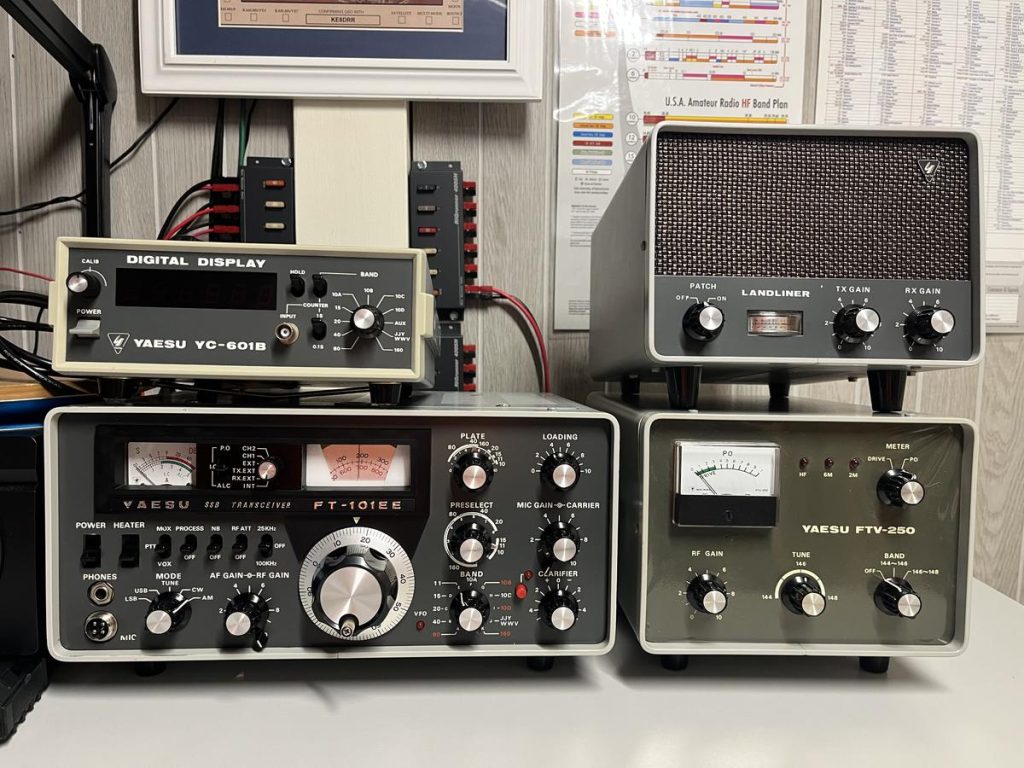
If you have been involved in amateur radio for any length of time, you have undoubtedly seen some changes occur. The huge strides made in amateur radio equipment have been astounding. I look across my shack at the Yaesu FT-101EE and a few thoughts hit me.
First, it still works and works well for what it is. I fire it up about once a month and check in to a net or two just to keep the dust off the tubes.
Additionally, I learned a lot about electronics theory and practice by maintaining and operating this radio.

Then I jump to the other end of the station where my Yaesu FTDX-101MP sits. It really shows the limitations of the FT-101EE. The dual receivers, VC-Tune, and phenomenal filtering make it a true joy to operate. I have a Yaesu FTDX-10 and a couple of Barrett 2050s that fall at various points along the spectrum in between.
The point is, as the technology changes, I have to pursue further education to keep up.

Next, let’s look at the new protocols that have come about. We can talk about DMR, which is not new but fairly new to amateur radio. It is an old Motorola product that has been adapted by the amateur radio community. We can throw in P25 and NXDN as protocols that started out in the commercial realm and were adapted. Then we have D-STAR and C4FM (System Fusion) that are strictly amateur radio protocols.
These protocols are not difficult to use. That being said, some of them require a sharp learning curve to make them work. I have not found many operators, if any, who can program DMR repeaters into a handheld without the aid of a programming software package. These are great tools, but if I am going to be proficient in their use, I have to invest the time in learning their ins and outs.
Then there are the digital modes—RTTY, Packet, PSK31, and FT4/FT8 to name a few.
Each one has a specific software package that lets users jump in the pool. These modes allow for the transfer of data or messages over the air from computer to computer. It is great to know that if I need to send an email in an “infrastructure down” event, I have the ability to do so. It’s why I have taken the time to learn how.
And that leads us to computers. Nowadays we not only need to know how to operate our radios, but we also need to be computer gurus as well. Let’s face it, we can go to bed tonight with everything working and wake up tomorrow and it won’t even power on. That’s how it seems to go with me. Just earlier today, I was working with a customer and a monitor went dark. Right before my eyes it died and was not responsive to defibrillation.
Another rabbit hole I fell down recently is 3D printing. It is amazing how many gadgets I didn’t know I needed before I got a 3D printer. I can now connect my TH-D72A and my phone right on the handle of my Arrow handheld satellite antenna. And I now have at least one HT holder in every room of the house. Plus, getting into 3D printing to support my amateur radio hobby forced me to learn computer-aided design (CAD)—just beginning this one.
You get the picture. One thing leads to another, which leads to another and so on. Sure, I could just sit contently in the shack and make phone contacts on the ole 101EE, but look at what I would be missing.
For me, the learning is fun, but even more enjoyable is passing on the knowledge to others. Hopefully by learning some new things, I can help inspire a new generation in a way that interests them while not forcing them to like what I like…and how I like it.
Until next time, 73 de AC8OW
The post Amateur Radio: Learning New Things Is Neverending appeared first on OnAllBands.